
Which Cape Verde Island Is Right for You?
São Vicente, Sal, and Santo Antão each offer something completely different. Here is how to choose.
By Lindsay Bourdeau | Published on May 21, 2026
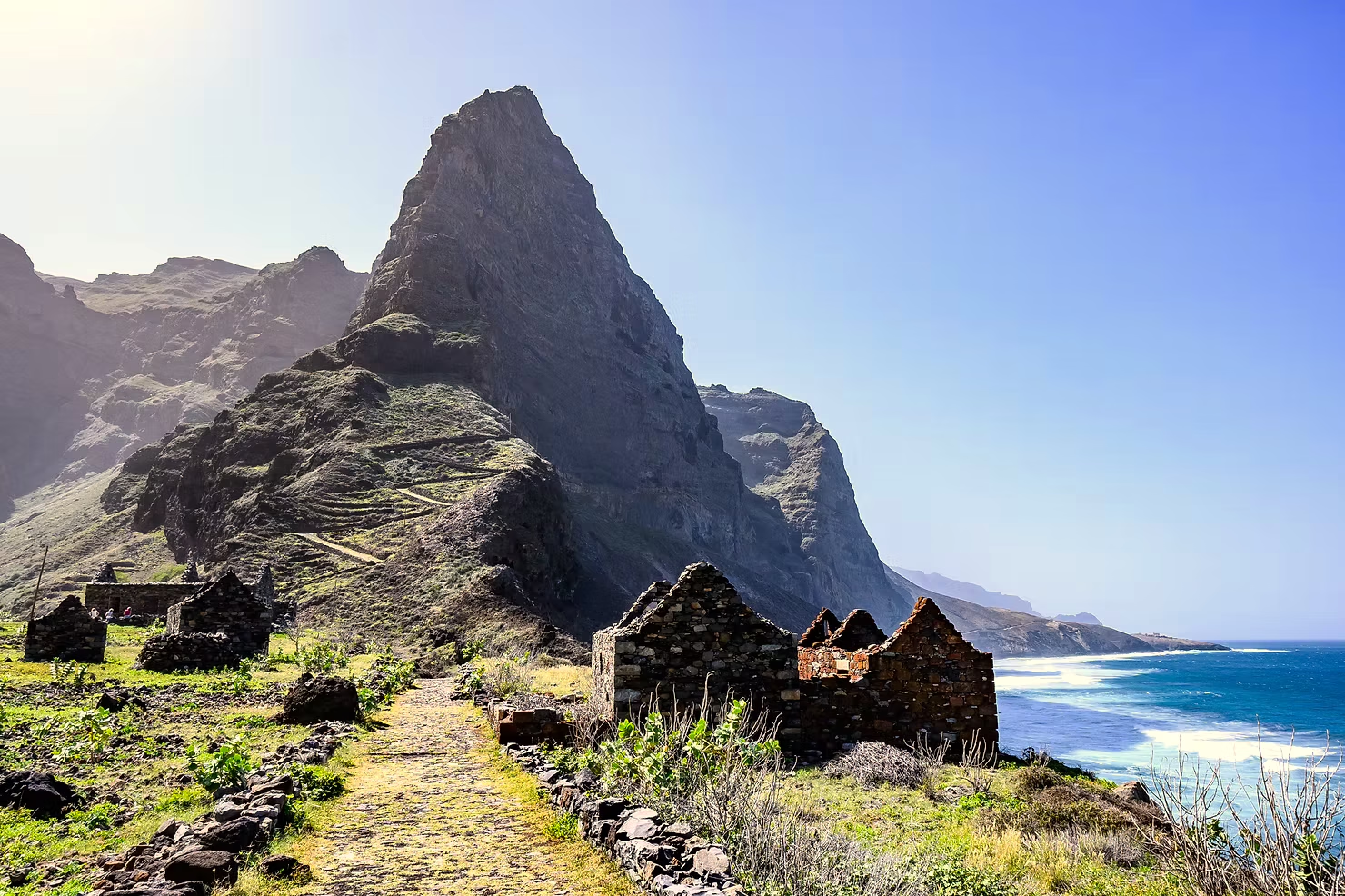
Coastal cliffs on Santo Antão island. Photo: Clare Walker
Cape Verde is ten islands. Most visitors pick one, stay put, and leave with an incomplete picture of what the archipelago actually offers. The smarter approach is to treat each island as its own destination with its own logic — because São Vicente, Sal, and Santo Antão are not variations on the same experience. They are three fundamentally different places that happen to share a coastline and a flag.
The question is not which island is best. The question is which island is right for the kind of trip you want to take.
São Vicente: Culture, Music, and the Most Authentic Cape Verde
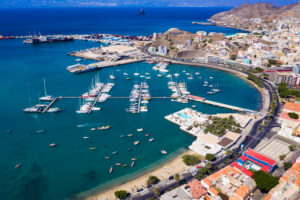
Laginha Beach in Mindelo, São Vicente. Photo: Shutterstock
São Vicente is the island for travelers who want to understand Cape Verde rather than simply visit it. It holds Mindelo, the cultural capital of the archipelago, and it is where Cape Verdean creative life — music, art, food, sustainable design — is most concentrated and most alive.
In Mindelo, color is everywhere — in the architecture, the local buses, the murals of Cesária Évora that appear throughout the city. A street resembling a walk of fame runs through the center, marked not with stars but with the footprints of notable Cape Verdean artists. The daily market along the main road operates with the same energy in the morning as it does in the evening, when live street performances take over and the nightlife scene begins.

View from Terra Lodge hotel. Photo: Terra Lodge Hotel
For anyone committed to sustainable travel, São Vicente has built a serious reputation as the greenest island in the archipelago. Terra Lodge — a hotel constructed entirely from recycled and natural materials, every element of it tied to Cape Verdean craftsmanship — is one of the most distinctive places to stay in the islands. The rooftop views over the city at evening are worth the visit alone. The restaurant not to miss is Casa Tchicau, a Black woman-owned hidden gem in Mindelo serving a four-course traditional Cape Verdean menu that changes daily, accompanied by live Morna music every night.
Beyond Mindelo, São Vicente offers hikes up Monte Verde and the chance to swim with turtles at São Pedro beach. Laginha beach carries the energy of a Rio de Janeiro waterfront — afternoon volleyball, evening sunsets, the whole city turning up at the water’s edge. São Vicente works for almost every type of traveler. The only visitor likely to leave disappointed is someone looking exclusively for a high-energy party destination. This island is not Sal. It offers balance — culture, nature, food, nightlife — but nothing in excess.
Sal: Beaches, Parties, and the Tourist Hub
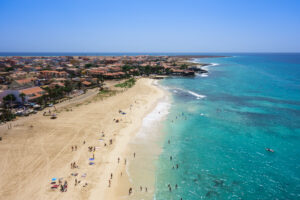
Praia de Santa Maria in Sal. Photo: Shutterstock
Sal is the island most visitors land on first, and for a significant portion of them, it is where they stay. That is not a criticism. It is an accurate description of what Sal has decided to be: a beach destination with a Caribbean energy, a serious party culture, and enough activity to fill a week without ever needing to leave.
The anchor is Praia de Santa Maria. The comparison that comes to mind immediately is Turks and Caicos — water of an almost implausible turquoise clarity, long stretches of sand that hold their quality from morning to evening. It is one of the most beautiful beaches in West Africa and one that most visitors are entirely unprepared for.
Beyond the beach, Sal operates on its own terms. The island takes its name from salt — it is a mass producer of natural salt — and a tour of the Salinas de Pedra de Lume, a series of salt flats at the base of an extinct volcanic crater, is one of the more unusual experiences in the archipelago. The salt lake allows for floating. Shark Bay offers something more confrontational: the chance to walk among and feed lemon sharks. Murdeira Bay provides knee-deep snorkeling for those who prefer their marine encounters at a safer distance. The fishing village of Palmeira is the place to observe daily local life without the tourist overlay, and nearby, the Blue Eye of Buracona — a striking optical illusion created when early morning sunlight penetrates an underwater cave — is worth building an itinerary around.
Then there is the nightlife. Sal’s after-dark scene starts around 7pm and does not end until well into the following morning. Funaná Museo Vivo is the anchor nightclub on the beach. Ocean Cafe runs a rooftop club scene with a nightly staff dance show. Chill Out Bar offers free kizomba classes. Pub Calema transitions from bar to nightclub as the evening progresses. Buddy Bar and One Love Reggae Bar fill out the rest of a very full evening.
The traveler who will not enjoy Sal is the one seeking peace and quiet. This island does not offer that, and it does not pretend to.
Santo Antão: Mountains, Trails, and the Most Stunning Interior in the Archipelago
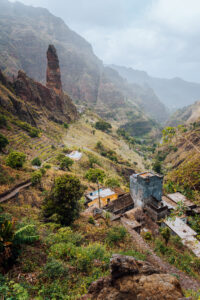
Village on Santo Antão island. Photo: Shutterstock
Santo Antão has no airport. The only way to reach it is by ferry from Mindelo — a one-hour crossing that deposits travelers at Porto Novo into what immediately feels like a different country. The mountains appear before the boat has docked. By the time a taxi is heading inland, it is already clear why Santo Antão is described as one of Cape Verde’s most beautiful islands. The deeper into the interior the road goes, the more that assessment starts to feel like an understatement.
This is a hiker’s island. The trails range from three hours to a full day, and they pass through landscapes — valleys, mountain ridges, coastal cliffs — that most hikers have not encountered anywhere else. Four trails stand out: Paul Valley, a seven-hour moderate hike through one of the most dramatic valleys in the archipelago; Fontainhas, four and a half hours at moderate difficulty along a cliff path above the ocean; Xôxô, the most accessible at three hours and suitable for any fitness level; and Coculi, seven hours at hard difficulty for those who want the full version of what Santo Antão offers. The trails accommodate all ages — children and elderly hikers are a common sight — but timing matters. Hikes should be planned to finish before dark, and the temptation to stop for photographs every few minutes should be factored into the schedule from the start.
What makes Santo Antão distinct beyond the hiking is the texture of daily life. Staying here — particularly in smaller accommodations outside the main town — means waking up to birds, watching a local fish seller carry her catch down the road, being handed fresh produce by farmers who assume generosity is simply how things work. It is the least visited of the three islands covered here and the most likely to produce the kind of travel experience that is difficult to describe to people who were not there.
The traveler who will leave disappointed is one expecting nightlife or beach culture. Santo Antão has neither in any meaningful quantity. That is entirely the point.
How to Choose

The ARMAS ferry between São Vicente and Santa Antão. Photo: Cape Verde Tourism
One week in Cape Verde, spent exclusively on a single island, is a week spent with an incomplete picture. The islands are connected enough to make movement between them practical, and different enough to make that movement worthwhile.
If there is only one island available: São Vicente. It offers the fullest range of experiences — culture, nature, food, music, nightlife — without requiring a specialist’s interest in any one of them. It is the island most likely to satisfy the widest range of travelers.
If there is time for two: add Santo Antão. The ferry from Mindelo takes an hour, the contrast with São Vicente is total, and the combination of the two covers more of what Cape Verde actually is than any other pairing.
Sal works best as a deliberate choice rather than a default. It delivers exactly what it promises — beach, sun, parties, and the best-connected airport in the archipelago — to the traveler who arrives knowing that is what they want.
The islands do not compete with each other. They answer different questions. The only mistake is choosing without knowing which question you are asking.