
Madagascar’s West Coast: Baobabs, Beaches and the Road Less Traveled
The journey to get here is genuinely difficult. It is also genuinely worth it.
By Mathilde Leveque | Published on May 21, 2026
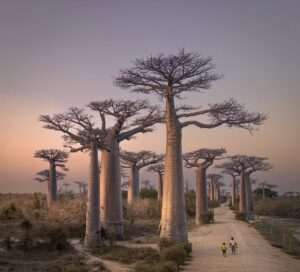
Avenue of the Baobabs at dusk. Photo: John Seager
Madagascar’s west coast does not make itself easy to reach. The flights sell out months in advance. The roads are rough. The bus from Antananarivo to Morondava takes seventeen hours — and that is on a good day. Your bus may break down. The journey may take twenty-one hours. None of that is a reason not to go. It is simply information that needs to be in the itinerary from the start.
What is waiting on the other side is one of the most quietly overwhelming landscapes on earth.
Getting There
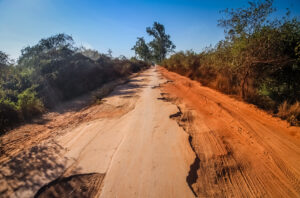
Damaged national road leading to Morondava, Madagascar. Photo: Shutterstock
The fastest way to reach Morondava is by air. Book as early as possible — domestic flights on this route sell out quickly. When flights are unavailable, the bus from Antananarivo is the alternative. Budget the full day and then some.
Once in Morondava, the best way to explore the interior is with a private driver and a 4×4. The roads leading inland to villages like Beroboka and Bekopaka are dirt tracks that only local drivers know how to manage. This is not an area for rental cars and self-navigation. A driver who knows the roads is not a luxury — it is how you actually get there.
The Baobabs
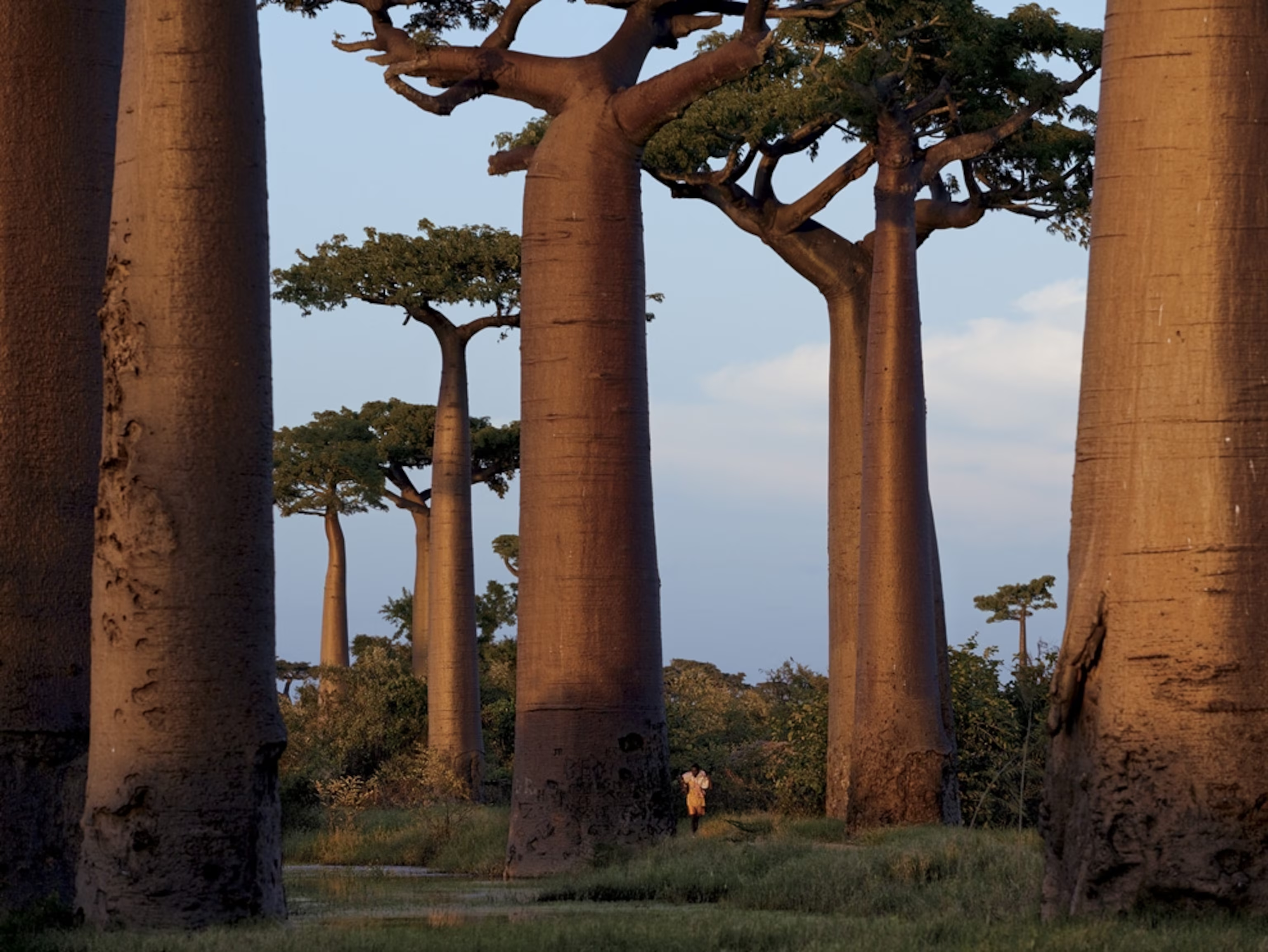
Baobab tress in Madagascar. Photo: Pascal Maitre
The baobab forests of Madagascar’s west coast are one of those places that photographs have made familiar without making real. The images exist everywhere. Standing next to one of these trees for the first time is something else entirely.
Driving toward the inland villages, the baobabs appear gradually on the horizon and then suddenly they are everywhere — stretching as far as the eye can see across a flat, dry landscape. The first instinct is a kind of childlike disbelief. You know what they look like but witnessing them in real time is the best feeling.
What photographs cannot capture is the scale. Some of these trees are over 800 years old and considered sacred by local communities. Standing next to one — a living thing that has been here through most of modern human history, unchanged while everything around it transformed — produces a particular kind of smallness that is hard to describe. The trunk is wider than most rooms. The age is almost impossible to process.
The landscape around the forest is flat and very dry. Near the Tsingy park, the terrain changes — long alleys lined with enormous mango trees break the flatness as the rock formations come into view.
The Tsingy and the Villages
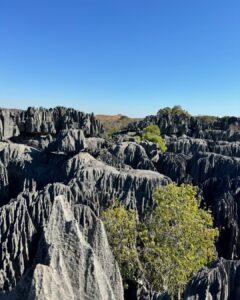
The Tsingy rock formations. Photo: Mathilde Leveque
The Tsingy de Bemaraha is one of the most unusual landscapes in the world — a vast field of razor-sharp limestone needles rising from the ground in dense jagged formations. It sits inland from Morondava, reached via the same dirt roads that run through the baobab forest.
The villages along the route — Beroboka, Bekopaka, and others between them — are not tourist destinations. They are places to pass through, stop in, and pay attention to. The roads that connect them are best left to the drivers who travel them every day.
Sleeping Under the Stars
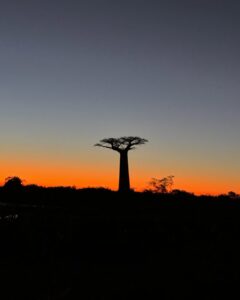
Baobab at sunset. Photo: Mathilde Leveque
One of the most memorable things the west coast offers has nothing to do with the baobabs or the Tsingy. It is simpler: sleeping in a local village with no running water, no electricity, and almost no cell service. Water drawn from a well. A night sky so free of light pollution that the Milky Way is visible in full.
Madagascar is a country of extraordinary natural wealth and significant economic hardship, and a night in a village makes that contrast impossible to ignore. It is the kind of experience that strips travel back to what it actually is — being present in a place rather than passing through it. It is also one of the best things the west coast has to offer.
What to Know
Book domestic flights to Morondava the moment the itinerary is confirmed. Availability disappears fast. Budget for a private driver with a 4×4 for at least three to four days to cover the baobab forest, the inland villages, and the Tsingy properly.
Bring more time than you think you need. The roads are rough and the distances are longer than they look on a map. The journey itself — the dirt tracks, the villages, the flat dry landscape opening into forests of ancient trees — is not something to rush. Madagascar’s west coast is one of those places that stays with you. The difficulty of getting there is part of why.