
What First-Time Travelers Should Know Before Visiting Kosovo
Europe’s youngest country runs on hospitality, history, and a boldness that most travelers haven’t discovered yet.
By Adebola MBV | Published on June 2, 2026
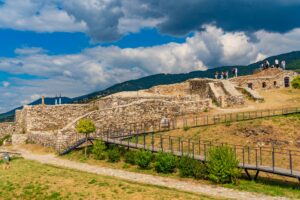
Prizren fortress. Photo: Shutterstock
Kosovo does not appear on most people’s travel radar. It is not the country that comes up when someone asks where to go next in Europe. That, for anyone willing to look a little closer, is exactly where the opportunity lies. At just over a decade and a half old as an independent nation, Kosovo declared independence in 2008 and remains one of the most layered, complex, and quietly compelling destinations in the Balkans. For first-time visitors, here is what to know before you go.
Visas and Entry
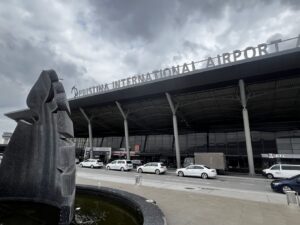
Pristina International Airport. Photo: Shutterstock
British and American passport holders can enter Kosovo visa-free for short stays. UK citizens can stay up to 90 days within a six-month period; US citizens are generally granted up to 90 days within a year. At the border, it is worth having proof of onward travel or accommodation easily accessible, as this may be requested.
Chinese and Nigerian passport holders typically require a visa arranged in advance. Entry requirements can change, so checking with the nearest Kosovo embassy or official government sources before travelling is essential. For all other nationalities, iVisa is a reliable starting point for current entry requirements.
Getting Around
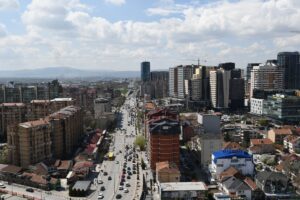
Pristina from the sky. Photo: Shutterstock
There are no Uber, Bolt, or FreeNow services operating in Kosovo. Transport runs on a mix of local buses, limited train routes, and taxis. The most convenient option for visitors is E-Taxi, which works similarly to ride-hailing apps elsewhere. Download the app and sign up before arriving, and book slightly in advance during busier periods as availability is not always instant and traffic can build.
For travel between cities, buses and coaches are reliable and affordable. Gjirafa Travel is a useful tool for checking departure times. Fares are paid directly on the bus, so carrying cash for this is important.
Money
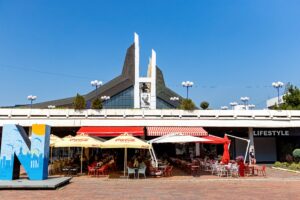
Café terrace in Pristina. Photo: Shutterstock
Kosovo uses the euro. Most restaurants in the main cities accept cards, but cash is the safer option to have on hand, particularly for transport, smaller vendors, and day trips outside Pristina. ATMs are available in the capital and in Prizren.
Safety
Kosovo is safe. That is not a caveat-laden statement — it is the consistent experience of travelers moving through the country. Visitors report feeling at ease throughout, including in Pristina and on day trips to Prizren. As with any destination, standard awareness applies, but there is nothing about Kosovo that should give a traveler pause.
The People
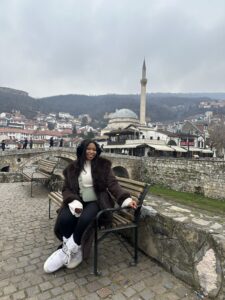
YIM Contributor, Adebola MBV, at Prizren bridge. Photo: Adebola MBV
The people are some of the kindest encountered anywhere in the Balkans — and the Balkans, broadly, already punches above its weight on that front. Kosovo’s locals are smiley, welcoming, and genuinely happy to receive visitors from all over the world. Black travelers in particular have noted how relaxed and inclusive the atmosphere feels, no staring, no friction, just warmth.
The Food
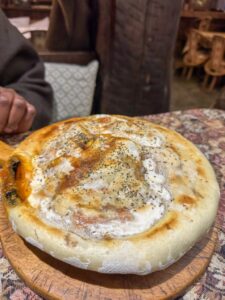
Traditional Kosovar spread. Photo: Adebola MBV
Do not underestimate Kosovo’s food. The cuisine here is seasoned with care and shaped by a culture that actually uses spice. One of the standout local dishes is gjizë me speca, a cottage cheese and chilli pepper combination that is as simple as it is good. Meat is seasoned well, vegetables are fresh, and the produce reflects a country with significant greenery and agricultural land.

YIM Contributor, Adebola MBV, at Mr. Fisher restaurant in Prisitina. Photo: Adebola MBV
For a more structured dining experience, the aquarium fish bowl concept in Pristina offers a seven-course meal from around €39, a remarkable value for what is served.
The Political Landscape You Will See
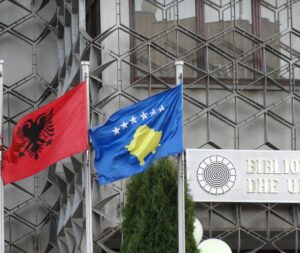
Albanian and Kosovo flags flying side by side. Photo: Shutterstock
Kosovo’s political reality is visible and worth understanding before arrival. The country declared independence from Serbia in 2008 and has since been recognized by over 100 UN member states, including the United States and the United Kingdom. Serbia, Russia, and China, among others, do not recognize it.
In Prizren, there is a building displaying the flags of every country that recognizes Kosovo, a striking and deliberate piece of public architecture. Albanian flags fly alongside Kosovo’s own throughout the country. The reason is deeply rooted in identity: over 90 percent of Kosovo’s population is ethnically Albanian, and many Kosovans see Albanian and Kosovar identity as inseparable. Ask a local about it and the answer will be honest and human, not political talking points, but a lived sense of who they are and where they come from.
Where to Go
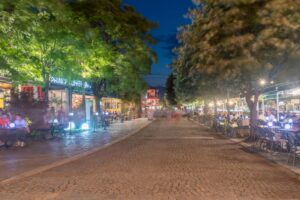
Prizren old town. Photo: Shutterstock
Pristina is the capital and the logical base. It is a city of street art, café culture, and creative energy, with the Newborn Monument and Mother Teresa Boulevard among its most recognisable landmarks. It is more dynamic than its size suggests.
Prizren is the essential day trip. About two hours from Pristina by bus (around €5 each way), it is Kosovo’s cultural and historical heart, Ottoman-era architecture, an old stone bridge, a hilltop fortress, and a cobblestoned old town that fills with locals and visitors alike come evening.
Peja is on the list for a next visit. It sits at the gateway to Kosovo’s mountain landscapes and Bjeshkët e Nemuna National Park, making it the nature-focused leg of any Kosovo itinerary.
For those visiting in the right season, the bears sanctuary is another draw worth planning around.
What Nobody Tells You
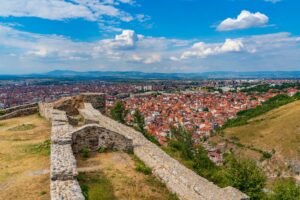
Kosovo countryside. Photo: Shutterstock
The biggest surprise Kosovo delivers is scale — not of size, but of things to do and see. Visitors who arrive expecting a bare-bones itinerary leave trying to figure out how to get back. The country is beautiful in a way that is easy to overlook on a map: fortresses on hills, fresh air, mountain backdrops, and a city in Pristina that is clearly positioning itself as a serious destination for both leisure and cultural tourism.
It is also, still, relatively uncommercialized. What that means in practice is that the experience feels real. The restaurants are not priced for tourists. The people are not performing hospitality for an industry — they are simply like that. Kosovo is a country that has been through significant upheaval within living memory, and there is something in the way it carries itself — forward-looking, grounded, open — that visitors feel.
The Numbers
A comfortable mid-range trip to Kosovo runs roughly €45 to €55 per person per day, covering accommodation, local meals, and transport. Budget travelers can do it for considerably less. The Pristina to Prizren bus costs around €5 each way. A seven-course meal at the aquarium fish bowl experience in Pristina starts from approximately €39 (around $42 USD). Flights into Pristina International Airport Adem Jashari connect from across Europe, with affordable options from most major hubs.
One Last Thing
Kosovo is not a destination that needs to be sold. It speaks for itself, clearly and quickly, to anyone who goes. What it needs is simply to be on the list.