
A First-Timer’s Guide to Slovenia: Europe’s Most Overlooked Country Explained
Mountains, lakes, a charming capital, and the Adriatic coast — in a country smaller than West Virginia
By Rajab Safarov | Published on June 2, 2026
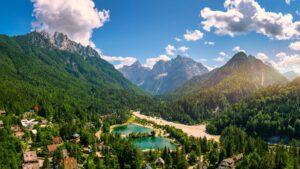
Triglav National Park. Photo: Shutterstock
Slovenia keeps getting overlooked. It sits between Italy, Austria, and Croatia, three of Europe’s most visited countries and still manages to fly under the radar. That is partly what makes it worth going. The mountains, the lakes, the charming capital, the Adriatic coastline, and some of the best wine in Central Europe are all reachable within a short distance of each other. It combines lush forests, dramatic mountains, and even a small but beautiful Adriatic coastline in an area so compact it barely seems possible. Some people describe it as a Mediterranean Switzerland. That is not an exaggeration.
Slovenia Travel Guide Essentials
Slovenia is part of the Schengen Area, so travelers will need a Schengen visa unless they already hold one or have a residence permit from another Schengen country. The country uses the euro, which simplifies things for most European travelers. In terms of cost, Slovenia is relatively affordable, especially compared to neighboring countries like Italy or Austria.
Language is not a big barrier, many young people speak very good English, and locals are generally helpful and willing to assist if needed. Slovenia is also an extremely safe country, which makes it ideal for solo travelers.
Around 5–7 days is enough to see the highlights comfortably. For those who want to explore more deeply, including nature, wine regions, and outdoor activities, it could easily fill longer.
When to Go
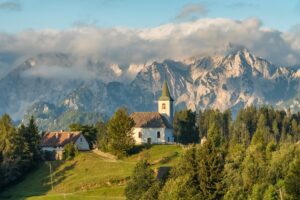
St. Spirit church in the Kamnik-Savinja Alps during the summer in Slovenia. Photo: Shutterstock
One of the best things about Slovenia is that it is a year-round destination. It has a mix of Alpine and Mediterranean climates, so summer works for hiking and lakes, and winter opens up skiing across the Alpine regions. Compared to neighboring countries, Slovenia’s ski resorts are considerably more affordable. A full winter week there is worth planning specifically for that reason. September is a strong entry point: the weather holds, the landscapes are green, and the crowds are manageable.
Ljubljana
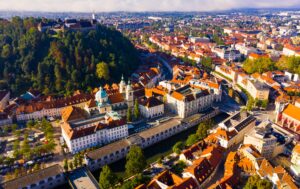
Ljubljana from the sky. Photo: Shutterstock
Ljubljana makes a natural base. It is a compact, walkable capital with a castle above the old town, a river running through the center, and a pace that makes it easy to settle into quickly. It is more approachable than most European capitals and considerably less expensive. The city works both as a starting point for day trips into the mountains and coast, and as a destination.
Lake Bled
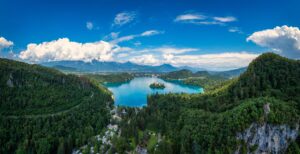
Lake Bled. Photo: Shutterstock
Lake Bled is one of those places you have seen many times in photos, but experiencing it in real life feels completely different. There is something unique about the setting, the small island with the church, the surrounding mountains, the peaceful atmosphere. It feels almost unreal, like a postcard that comes to life. The castle above the lake is worth going up for the views alone, and the kremšnita, the famous Bled cream cake, is something that should not be missed while there. It is light, creamy, and has become almost a symbol of the region.
Getting Around
Slovenia is incredibly compact. The mountains, the coast, the capital, and the wine country are all achievable in a single trip without rushing. A car is the most flexible option for moving between regions — the drives are scenic and the roads are easy. From Ljubljana, Lake Bled is under an hour. The Adriatic coast at Piran is around 90 minutes. Triglav National Park is accessible within the same range. There is very little wasted travel time.
The Food and Wine
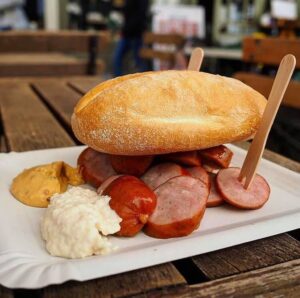
Kranjska Klobasa, one of the must-try dishes whilst in Slovenia. Photo: Klobarsana Restaurant
Slovenian cuisine is shaped by its neighbors — Italian, Austrian, and Balkan influences all show up — but it still has its own identity. For first-time visitors, kranjska klobasa — Carniolan sausage, usually served with mustard and fresh bread — is one of the most iconic dishes and the right place to start. Žlikrofi are small dumplings filled with potatoes and served with meat or rich sauces, simple but genuinely satisfying. In smaller towns and rural areas especially, meals feel homemade, ingredients are fresh, and there is a strong connection to tradition.
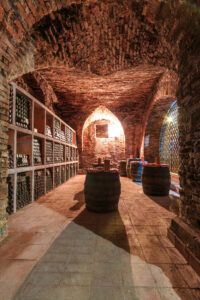
Old wine cellar in Prlekija. Photo: Shutterstock
The wine is one of Slovenia’s most underrated qualities — surprisingly good and not widely talked about internationally. Beyond wine, craft beers are widely available and borovničke, a blueberry liqueur, is a local favorite worth trying for something different.
How It Compares to Its Neighbors
Slovenia feels like a blend of Italy, Austria, and Croatia, but with its own distinct character. Compared to Croatia, it feels more developed and organized. Compared to Austria, the people are more open and approachable. Compared to Italy, it is generally more affordable. What makes it special is the combination of different landscapes and cultures compressed into such a small area. Alpine scenery, Mediterranean influences, and Central European charm, all in one trip, is quite rare anywhere in Europe.
One Reason to Book
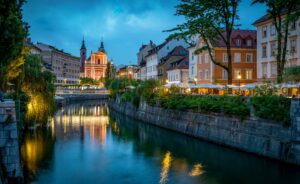
Tromostovje bridge and Ljubljanica river in Ljubljana city center. Photo: Shutterstock
For someone who keeps dismissing Slovenia or has never considered it: the fact that you can experience mountains, lakes, a charming city, and the sea all within a short distance is genuinely uncommon. It is one of those destinations where you do not have to choose between nature, culture, or relaxation. You can have all of it in one trip, without the crowds of more famous European destinations. That combination is hard to find. Slovenia has it.
The Numbers
Slovenia uses the Euro (EUR). Budget accommodation in Ljubljana starts around 40–70 EUR (44–77 USD) per night; mid-range hotels run 80–150 EUR (88–165 USD). Lake Bled accommodation with lake views starts around 100–200 EUR (110–220 USD). A restaurant meal in Ljubljana runs approximately 12–20 EUR (13–22 USD) per person. Ski passes in Slovenian Alpine resorts start around 30–40 EUR (33–44 USD) per day — significantly less than comparable Austrian or Italian resorts. The best times to visit are May through September for outdoor activities and December through March for winter sports. Slovenia is part of the Schengen Area — check visa requirements based on your passport.