
Discover Batumi: Georgia’s Coastal Star on the Black Sea
A 19th-century old town, a modern skyline, a seven-kilometer boulevard on the Black Sea, and some of the best food in the Caucasus.
By Amina Mamaty | Published on June 1, 2026
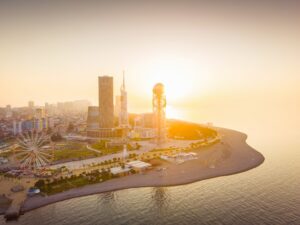
Batumi’s coastline at sunrise. Photo: Shutterstock
Batumi is not what most people expect. You arrive thinking mid-sized port city on the Black Sea and find something considerably more: a 19th-century old town sitting directly beside modern towers, a seven-kilometer boulevard along the water, and sea views that make you stop walking. It is more developed than anything you read about it prepares you for, and the development somehow hasn’t ruined it. The contrast between old and new, between Georgian tradition and serious modern ambition, is what makes it worth the trip.
Batumi is Georgia’s second-largest city and the capital of the Adjara region. It sits 20 kilometers from the Turkish border, which explains a lot about its character — Ottoman history, Soviet architecture, Georgian culture, and a post-2000s building boom that produced one of the more surprising skylines in the Caucasus. It feels like three different cities at once and somehow holds together.
The City
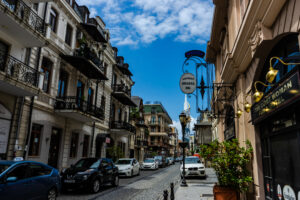
Old Town Batumi, with colorful 19th-century facades. Photo: Shutterstock
The Old Town is where Batumi’s character is clearest. Small cafes, pastel buildings, wrought iron balconies — it feels completely separate from the modern towers a few blocks over. Europe Square and Piazza Square are the neighborhood’s social centers, the kind of places where people actually sit and stay rather than pass through. The Batumi Mosque — Ottoman-era, understated — sits right in the middle of it all. The Cathedral of the Holy Transfiguration and the Church of St. Nicholas are nearby, and the mix of all three in the same few blocks tells you exactly what kind of city this is.
The boulevard runs seven kilometers along the Black Sea and is where the city exhales. Evenings especially — street performers, people walking, cyclists, the Ali and Nino kinetic statue near the harbor doing its slow rotation at sunset. The Alphabet Tower, 130 meters tall and shaped around the Georgian alphabet, is impossible to miss and worth stopping for.
The Beach
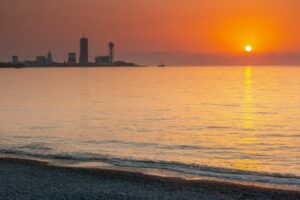
Batumi’s Black Sea coastline at sunset. Photo: Shutterstock
The beach is pebble, not sand. The Black Sea is striking from the shore — deep blue-green, the skyline shifting between old facades and glass towers depending on where you stand. It is more of a visual experience than a beach day destination. If you come expecting to spend hours on a pristine sandy stretch, you will find other things to do. If you come for the city and happen to be beside the sea, the coastline is a strong backdrop to everything else.
For quieter beach time, the coastline south of Batumi — Kvariati and Sarpi, close to the Turkish border — is more relaxed and away from the city energy.
What to Eat and Drink
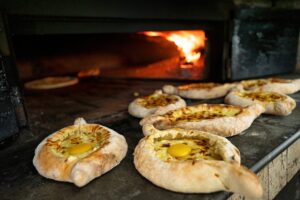
Georgian food: khachapuri Adjarian style, boat-shaped with an egg. Photo: Shutterstock
The food is where Georgia delivers completely. Adjarian khachapuri — the boat-shaped version filled with cheese, topped with a raw egg and butter that you stir in at the table — is one of the great dishes in this part of the world, and Batumi is where it comes from. Khinkali are the doughy dumplings filled with spiced meat and broth, eaten by hand, and locals will show you the right technique if needed. Badrijani nigvziani — fried eggplant with walnut and garlic paste — is the side dish that disappears first every time.
Georgian wine is its own category. The country has one of the oldest winemaking traditions in the world, fermenting and aging in qvevri — large clay vessels buried underground — in a method that predates most European winemaking by thousands of years. The amber-colored skin-contact whites taste like nothing made anywhere else. Georgian Naturale Wine & Food in the Old Town is the right place to get into it — the owner Beka Minadze pours from unlabelled bottles of local and Kakhetian producers that never reach export markets.
Chacha is Georgia’s grape-based spirit, somewhere between grappa and brandy. It gets offered constantly and refusing is considered impolite. Say gaumarjos — cheers — and drink.
Beyond the City
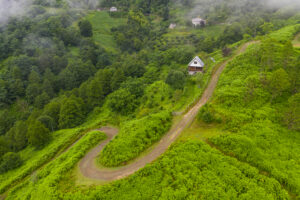
Mtirala National Park. Photo: Shutterstock
The mountains behind Batumi are worth at least a day. Mtirala National Park — the name roughly translates to “crying mountain” for the amount of rainfall it gets — is a dense subtropical forest with hiking trails through waterfalls and old-growth trees, accessible by a short drive. The Makhuntseti Waterfall and the medieval Makhuntseti Bridge nearby work well as a half-day excursion. The Khelvachauri Wine Route, about 15 kilometers out, takes you to family-run wineries where the winemaking is traditional and they will feed you whether you planned on it or not.
The Batumi Botanical Garden — 107 hectares on a cape north of the city with Black Sea views — is less of a hike and equally worth the time. One of the largest botanical gardens in the Caucasus.
Who It’s For
Batumi works well for anyone who has done Tbilisi and wants to see a different side of Georgia — coastal, contemporary, more glamorous than expected. It works for food and wine travelers who want to go deeper into Georgian cuisine and the qvevri tradition. And it works for anyone looking for a beach destination that isn’t just a beach — somewhere with enough architecture, history, and food to fill several days even if you never get in the water.
Best Time to Visit
Late May through June and September through early October are the best windows — warm enough for the boulevard and the beach without the peak-season crowds and humidity of July and August. Summer is when Batumi is most alive: beach parties, festivals, rooftop bars, late nights. Winter is quiet and mild by Caucasus standards, with a more local feel to the city.
The Numbers
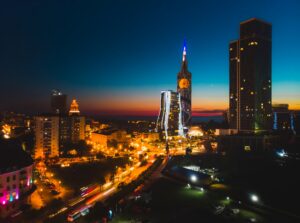
Batumi at night, the illuminated boulevard, and the Alphabet Tower. Photo: Shutterstock
Batumi International Airport has direct flights from Istanbul, Tel Aviv, and major cities across the region — seasonal routes expand significantly in summer. From Tbilisi, the Stadler train takes just over five hours — book ahead in summer. The city is walkable; most of what you need is along or near the boulevard and old town. Taxis within the city run 5–10 GEL (around $2–3 USD). Accommodation ranges from boutique guesthouses in the Old Town to high-rise hotels on the seafront. A restaurant meal with wine runs about 40–60 GEL ($12–18 USD) per person. Local currency is the Georgian Lari (GEL).