
A First Timer’s Guide to Côte d’Ivoire: What to Know Before You Go
Two of West Africa’s most compelling coastlines. A capital city that operates at full speed. And almost nobody outside the region talking about any of it. Here is what you need to know before you go.
By Amina Mamaty | Published on May 1, 2026

Abidjan skyline. Photo: Shutterstock
Most people who visit Côte d’Ivoire have one of two reactions. The first is surprise at how dynamic Abidjan feels — the architecture, the restaurants, the energy of a city that takes itself seriously. The second is surprise at how few other tourists they encounter. Both reactions are fair. Côte d’Ivoire is West Africa’s most underrated destination, and the people who have figured that out are, for now, keeping it largely to themselves.
This guide is for first-time visitors who want to arrive prepared. The country has a learning curve — but it also has beaches that will change your understanding of what West Africa looks like, a capital city unlike anything else in the region, and a culture that rewards the traveler who comes with genuine curiosity rather than a checklist.
Before You Go — Visas and Entry
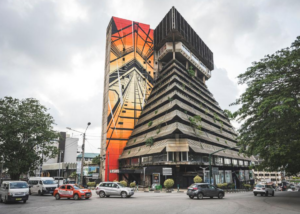
“La Pyramide” in Abidjan. Photo: Shutterstock
Most visitors need a visa to enter Côte d’Ivoire. The e-visa is the easiest route — apply and pay online at least ten working days before you travel, and collect your visa on arrival at Abidjan’s Félix-Houphouët-Boigny International Airport. The process requires a passport valid for at least six months, a return ticket, and proof of accommodation.
Yellow fever vaccination is non-negotiable. Proof of vaccination is required at entry and you will be asked to show your certificate. Get that sorted before anything else.
The Language
French is the official language of Côte d’Ivoire, and leaning into it even a little will make your trip significantly better. Download a translation app before you land, learn ten to fifteen basic phrases — greetings, numbers, directions — and use them. Ivorians respond warmly to the effort. A badly pronounced bonjour and merci will take you further than silence. The better hotels, restaurants, and operators in Cocody, Plateau, and Zone 4 will have English speakers on staff, so your base is covered. Beyond that, lean on the translation app and the phrases.
Getting Around

Abidjan skyline. Photo: Shutterstock
Abidjan is a large city built across multiple islands and peninsulas connected by bridges, and it moves fast. Ride-hailing apps including Uber, Yango, and Heetch operate throughout the city and are the easiest way to get around — they verify drivers, let you input destinations without needing to speak French, and offer air-conditioned vehicles. Use them consistently.
For trips between cities — Abidjan to Grand-Bassam or Abidjan to Assinie — Uber works well for journeys under two hours, and Assinie is absolutely doable by app. For longer distances or more remote destinations, hire a private driver through your hotel or a trusted local operator. Air Côte d’Ivoire connects the major cities domestically if you need to cover more ground quickly.
Money
The currency is the West African CFA franc, shared across eight former French colonies in the region. At current rates, one euro exchanges for approximately 655 CFA and one US dollar for approximately 570 CFA. Abidjan has ATMs but they are not always reliable and are rare outside the city — carry enough cash for your full trip. Cards are accepted at larger hotels and restaurants but cash is king for most daily transactions. One practical tip nobody tells you: carry small bills wherever possible. Getting change for large notes is a genuine challenge, and many vendors simply cannot break anything larger than a 2,000 CFA note.
When to Go

Assinie Lagoon. Photo: Coucoué Lodge
The best time to visit is October through April — the dry season, when skies are clear and the coast is at its best. May through September brings heavy rains, particularly June to August, which can make some roads slower and beaches rougher. December is peak season — the Assinie beach clubs and Grand-Bassam restaurants fill up with Abidjanais on holiday and the coastal energy is at its highest. If you prefer more space and lower prices, November or January through March is the sweet spot.
How Long Do You Need

Rooftop view from Ayoka Restaurant Photo: Ayoka Restaurant & Sky Bar
Four days is the minimum. A week is better. A realistic first trip looks like this: two days in Abidjan to get your bearings, explore the Plateau district and the Cocody art scene, and eat well; one day in Grand-Bassam for the colonial quarter and the beach; two to three days in Assinie for the lagoon, the Atlantic, and doing very little very well. That itinerary covers the country’s greatest hits without rushing anything.
A Few Things Nobody Tells You
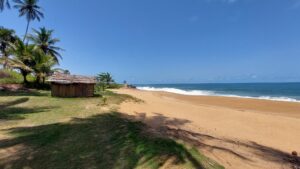
Grand Béréby beach. Photo: Young International Magazine
Abidjan is the place to go if you want to experience the French side of West Africa at full volume — the food, the aesthetic, the pace, the style. It is one of the most distinctive cities on the continent, and it operates entirely on its own terms. The city’s lagoon system is one of its defining features. Abidjan is built across a series of islands connected by bridges, and water is everywhere. If you have time, take a pirogue across the lagoon between neighborhoods. It is one of the best and most affordable experiences the city offers. Ocean currents along the coast are strong, and rip tides are common at some beaches. Ask locally before swimming anywhere unfamiliar, especially along the open Atlantic. This applies at Grand-Bassam in particular.
Greet people. Even a simple bonjour before any interaction is expected and appreciated. The warmth you will receive in return is one of the things travelers consistently report being unprepared for — and one of the best reasons to go.