
A First Timer’s Guide to Madagascar: What to Know Before You Go
Lemurs, yes. Also: a chaotic capital, islands that are nothing alike, and a journey most people underestimate.
By Marianne Charles | Published on May 22, 2026
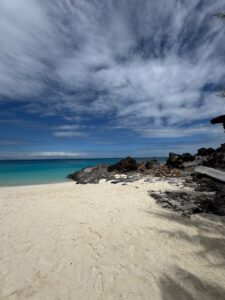
Photo: Marianne Charles
The biggest misconception about Madagascar is that it is a single experience. It is not. The capital is a dense, chaotic city with layered history. The northwest islands range from a working port town to a private island with no cars and one resort. The wildlife exists nowhere else on earth. None of these things are interchangeable, and a trip that treats them as background to a beach holiday will miss most of what the country actually is.
Ten to fourteen days is the minimum to see multiple sides of it properly. Less than that and the journey — which from the United States alone involves at least two connections — is not worth the effort.
Start in Antananarivo — and Give It More Than a Night
Almost every international flight into Madagascar lands at Ivato International Airport in Antananarivo. The instinct is to push straight to the coast. The capital — Tana, as locals call it — is chaotic on arrival, and the airport process can feel disorganized compared to more developed tourism infrastructure. Neither of those things is a reason to leave quickly.
Tana is where Madagascar becomes readable. The markets, the hillside architecture, the gap between the country’s extraordinary natural wealth and the economic conditions visible on its streets — all of it is present here in ways that give context to everything that follows. A day and a half before heading north is enough. The Antananarivo article in this series covers what to do with that time.
One practical note: taxis are available in the capital but not advised for safety reasons. Arrange airport transfers and ground transportation through your hotel. Most properties coordinate trusted local drivers and that system works considerably better than flagging something down independently.
Getting Around
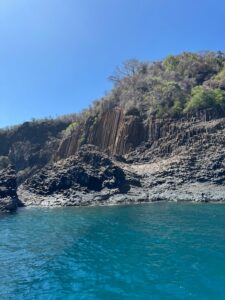
Photo: Marianne Charles
Madagascar is a large country with uneven infrastructure. The most practical way to cover distance is by domestic flight — Antananarivo to Nosy Be is the most common northern route and takes approximately ninety minutes. Roads between regions are a different calculation entirely: unpaved stretches, long hours, and in the wet season, tracks that become impassable. Build any itinerary around flights first, then fill in the ground movement.
Book transportation and excursions in advance through accommodations wherever possible. Hotels and resorts across Madagascar coordinate airport transfers, drivers, and excursions as a matter of routine, and the logistics are substantially smoother when arranged this way. For additional outings arranged directly with drivers, get a sense of pricing from the hotel first — that number is a useful reference point when negotiating independently.
The Islands
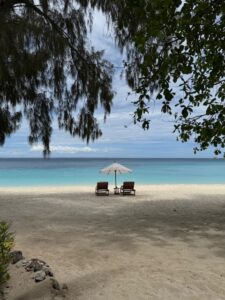
Photo: Marianne Charles
Nosy Be — pronounced noh-see bay — is the largest and most accessible of the northwest islands and the natural base for island-hopping. It is not a polished resort destination. Accommodation is more boutique and rustic than the luxury infrastructure of comparable Indian Ocean islands, and that is the point. What Nosy Be offers is a sense of remoteness and authenticity that more developed destinations have long since traded away.
From Nosy Be, smaller islands are reachable by boat. Nosy Tsarabanjina — pronounced cha-ra-bahn-jeen-ah — is an hour’s transfer from the main port and is almost entirely given over to a single property, the Constance Tsarabanjina. The experience there is barefoot luxury in the most literal sense: crystal-clear water, exceptional service, and an island that receives no day-trippers. Nosy Tanikely is a marine protected area with strong snorkeling. The basalt column formations visible from the water between islands are unlike anything in the wider Indian Ocean region.
Plan at least three nights based in the islands. September is considered the optimal time to visit — warm, low humidity, and ocean conditions calm enough for boat transfers and snorkeling. January through March brings cyclone risk and is not advised.
The Wildlife

Photo: Mathilde Leveque
Lemurs exist nowhere else on earth except Madagascar. Most visitors arrive knowing this as a fact. It lands differently in person. At the Sacred Banyan Tree in Nosy Be — a spiritual site with significant local meaning — a guide’s whistle sends movement through the canopy, and what initially appears to be large squirrels reveals itself as lemurs moving toward you. Up close, they have an expression that is difficult to describe and impossible to forget. The experience is not a zoo encounter. The animals are wild and the setting is a functioning place of worship. Approach it accordingly.
Beyond lemurs, zebu cattle are present throughout the country — pulling carts, plowing fields, moving through the countryside in ways that feel specific to Madagascar. They are cultural symbols as much as livestock, and their presence in the landscape is one of the details that makes the country feel unlike anywhere else.
The Culture
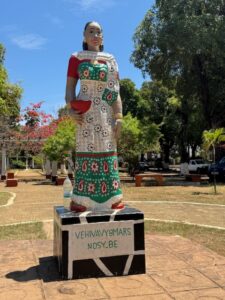
Photo: Marianne Charles
Madagascar’s cultural mix is one of the things most first-timers are unprepared for. African, French, and Italian influences layer across the country in ways that vary by region. In Nosy Be especially, pride in local tradition is visible and present: traditional patterned fabrics worn in daily life, masonjoany — a sandalwood-based face mask used for sun protection and decoration — commonly seen on women’s faces. The Vehivavy 8 Mars statue in Hell-Ville’s town square is a monument to Malagasy women and worth a stop.
One reality that first-time visitors should be prepared for: the contrast between Madagascar’s landscapes and the daily economic conditions of its people is stark and visible. In Antananarivo particularly, travelers will encounter significant poverty, including children panhandling at intersections. Handling that with patience and cultural sensitivity matters. Connecting with local organizations or charities is a more effective way to give back than handing money out of vehicle windows.
English is far less common than in many other African destinations. French is the primary language. Download a translation app with offline capability before arrival.
What to Buy and Where
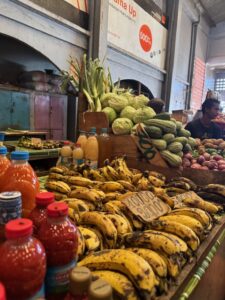
Photo: Marianne Charles
The covered market in Hell-Ville operates in Ariary — the local currency — rather than the euro pricing that appears at resort-adjacent shops. It is where daily life in Nosy Be actually runs. Madagascar produces some of the finest vanilla in the world and it is available at the market at prices that bear no resemblance to what the airport sells it for. Buy it here and carry it out.
Cash is essential throughout Madagascar. Card systems exist in some restaurants but go down without warning. Come with enough Ariary to cover markets, smaller restaurants, and unexpected situations where payment infrastructure simply stops working.
Getting There
International carriers including Air France and Corsair connect Antananarivo’s Ivato International Airport to Paris, Nairobi, Johannesburg, and regional hubs. From the United States, routes typically connect through London, Paris, Addis Ababa, or Johannesburg. There are seasonal direct flights from Milan to Nosy Be that make the northern route significantly more straightforward. Domestic routes from Antananarivo to Nosy Be’s Fascene Airport are operated by Air Madagascar and Tsaradia and take approximately ninety minutes. Visas are available on arrival but obtaining one in advance is strongly recommended — airport payment systems can be unreliable and the process adds time on a journey that is already long.
The Numbers
Madagascar’s currency is the Ariary (MGA). Budget accommodation in Nosy Be starts around 80,000 Ar (roughly 16 USD) per night; mid-range properties run 200,000–500,000 Ar (40–100 USD). Private island resort pricing operates on a different scale. Domestic flights between Antananarivo and Nosy Be cost approximately 400,000–700,000 Ar (80–140 USD) booked in advance. Guided wildlife walks at reserves near Nosy Be typically run 50,000–80,000 Ar (10–16 USD) with a local guide. The wet season runs November through April — most first-timers visit between May and October when weather is predictable and roads are passable.