
Mongolian Cashmere: Why It’s Considered the World’s Finest (And Where To Buy It)
You will buy more than you planned. Consider yourself warned.
By Amina Mamaty | Published on May 26, 2026
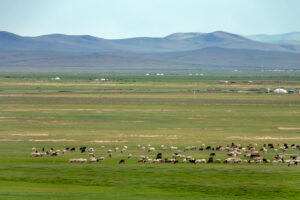
Goats on the Mongolian steppe. Photo: Shutterstock
Mongolia produces approximately forty percent of the world’s raw cashmere. That number alone should tell you something — but it doesn’t quite prepare you for the moment you actually touch it. The softness is immediate and unmistakable, the kind that makes everything you own back home feel vaguely inadequate by comparison. The prices will make you want to buy one in every color. And the variety — sweaters, scarves, wraps, gloves, blankets, socks — will make you wish you’d brought an extra bag. Most travelers who go to Mongolia for the steppe and the festivals come home talking about the cashmere. It tends to happen that way.
Why Mongolia
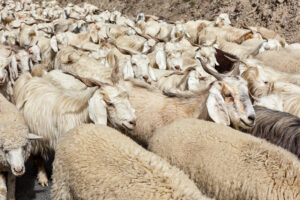
Cashmere goats. Photo: Shutterstock
Mongolian cashmere comes from the Changthangi goat — more commonly known as the cashmere goat — which grazes across the Mongolian steppe in some of the most extreme temperature conditions on earth. Winters that drop to -40°C force the animals to grow an exceptionally fine, dense undercoat to survive. That undercoat, combed out by hand each spring, is the raw material for what the fashion industry quietly considers the finest cashmere in the world. The fiber is longer, finer, and warmer than cashmere from most other sources — and because Mongolia is the source rather than a middleman, what you’re buying at the retail level is as close to origin as it gets.
The best Mongolian cashmere is graded by micron count — the finer the fiber, the lower the micron, the softer and more valuable the yarn. Premium Mongolian cashmere typically falls between fourteen and sixteen microns, comparable to the finest grades used by European luxury houses that charge four to five times the price for finished garments. The difference is that in Ulaanbaatar, you are buying at the source.
What to Know Before You Shop
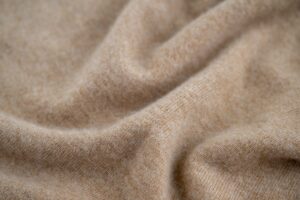
Cashmere fabric texture. Photo: Young International
Not all cashmere sold in Mongolia is equal. The market ranges from genuine high-grade cashmere to blended or lower-quality product aimed at tourists who don’t know the difference. A few things to look for: pure cashmere should feel immediately soft against bare skin with no scratchiness whatsoever. It should have a slight natural warmth even before you put it on. When you stretch it gently, it should return to shape. If it pills immediately in the store or feels stiff, it’s either blended or low-grade.
Price is also a signal. Genuinely high-grade cashmere is not cheap even in Mongolia — it is simply dramatically less expensive than what you’d pay for equivalent quality in New York, Paris, or Tokyo. A sweater that would retail for $400–$600 at a European luxury brand might cost $80–$150 in Ulaanbaatar at a reputable retailer. If something is priced so low it seems impossible, it probably is. The incredible deals are real — but they reward the shopper who knows what they’re looking for and is willing to spend a little more for the real thing.
Where to Buy
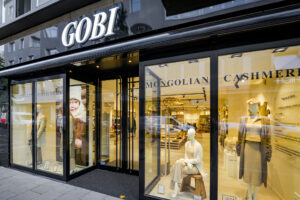
Gobi Cashmere storefront. Photo: Gobi Cashmere
For first-time buyers and those who want guaranteed quality without the guesswork, Gobi Cashmere is the standard. Mongolia’s largest cashmere brand has flagship stores in Ulaanbaatar and a reputation that has been built over decades of export to international markets. The range is extensive — classic sweaters, lightweight travel wraps, accessories — and the quality is consistent. Prices are higher than the markets but still a fraction of what comparable product costs in the West. It is the safe, reliable choice, and there is nothing wrong with that.
For those willing to explore further, Ulaanbaatar’s cashmere district around the State Department Store on Seoul Street is worth an afternoon. Multiple boutiques and smaller brands operate in and around this area, offering everything from minimalist contemporary knitwear to more traditional Mongolian designs. Bargaining is not always expected at established boutiques, but it doesn’t hurt to ask. The more adventurous shopper can also find cashmere at Narantuul Market — known locally as the Black Market — though this requires more discernment. The product range is wider and the prices lower, but quality varies significantly and knowing what to feel for matters here more than anywhere else.
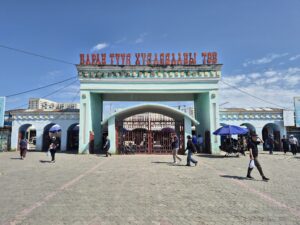
Narantuul Market in Ulaanbaatar. Photo: Young International
One practical note: buy more than you think you need. The pieces hold up. The quality is real. And the moment you get home and someone asks where your sweater is from and you say Mongolia, you will wish you had bought another one.
What to Buy
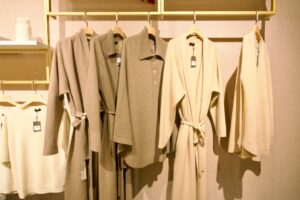
Cashmere pieces. Photo: Gobi Cashmere
Scarves and wraps are the easiest entry point — lightweight, packable, and immediately useful in any climate. Sweaters and cardigans in natural undyed tones are perennial and travel beautifully. If you want something unexpected, Mongolian cashmere socks and gloves are exceptional and often overlooked by visitors focused on the bigger pieces. Blankets and throws, if you have room in your luggage, are among the best value purchases available — the kind of thing that becomes a fixture in your home for decades.
The Bottom Line
The travelers who know this go back to Mongolia with an extra bag. The ones who don’t find out the hard way — standing in a store somewhere else in the world, holding something that costs three times as much and feels half as good, thinking about Ulaanbaatar.