
What to Eat in Côte d’Ivoire: A Guide to West Africa’s Most Underrated Food Culture
From stadium food stalls to cocoa factories, Ivorian cuisine is one of West Africa’s most distinctive and least documented food cultures. Here is where to start.
By Anthony Thurston | Published on March 25, 2026
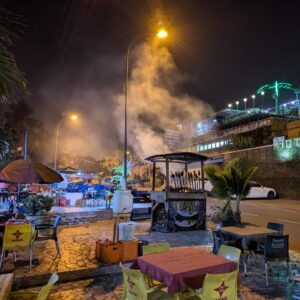
Nightlife scene in Bouaké, Côte d’Ivoire. Photo: Geography King
There is a moment at the opening match of the African Cup of Nations 2024 (AFCON) that tells you everything about how Côte d’Ivoire relates to food. At halftime, the stadium emptied — not toward the exits, but toward the food stalls, in a collective, purposeful rush. The answer to what everyone was ordering was immediate and unanimous: alloco and chicken. Fried plantain, crispy and slightly caramelized, paired with perfectly seasoned chicken. A simple dish. An entirely convincing introduction.
Ivorian cuisine does not announce itself with heat or theatrical complexity. It arrives through technique, seasoning, and the quality of what is grown here — in a country that produces more cocoa than anywhere else on earth, that relationship between land and plate runs deep. What emerges is a food culture that is communal by nature, unhurried by design, and more layered than most visitors expect.
The Rhythm of a Day
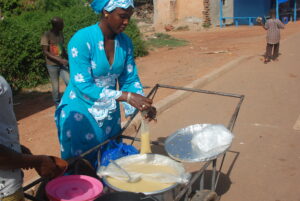
Early morning, porridge vendor in the streets of Abidjan. Photo: Modjou Doukoure
Eating in Côte d’Ivoire follows a rhythm that reflects how the country moves through its days. Mornings begin gently — millet porridge, warm and lightly spiced with ginger, earthy and grounding in a way that bears no resemblance to the packaged cereals of the Western breakfast table. It is the kind of dish that prepares you for a full day rather than rushing you through one.
By evening, the energy shifts entirely. The streets come alive, vendors set up, and meals stretch as long as the conversations that accompany them. The food is always communal. The table, whether it has chairs or not, always has room.
The Dishes Worth Knowing
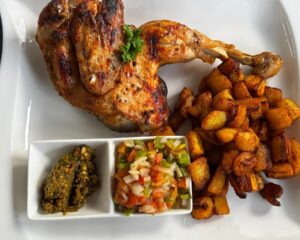
Alloco and chicken dish. Photo: Le Celtic Restaurant
Five dishes define the entry point into Ivorian food culture and none of them require a restaurant reservation.
Attiéké is the place to start. Made from fermented and grated cassava, it is the starch that anchors daily life in Côte d’Ivoire — present at breakfast, lunch, and dinner, eaten with grilled fish, chicken, or whatever the evening’s vendor has on offer. Its slightly sour, granular texture is unlike anything else in the West African canon and entirely specific to Côte d’Ivoire in origin. To visit without eating attiéké is to miss the point of the cuisine entirely.
Alloco and chicken is the other essential — fried plantain prepared to a specific standard that street vendors and stadium stalls have mastered equally. The plantain is crispy at the edges, caramelized within, and the chicken alongside it is seasoned with a patience that fast food never has. It appears everywhere, which is not a sign of its ordinariness but of its centrality. At AFCON 2024, when the halftime whistle blew, an entire stadium made a collective decision about what to eat. The answer was alloco and chicken. That says everything.
Poulet braisé — braised barbecue chicken slow-cooked until the flavor runs through every layer — is the dish that demonstrates what Ivorian cooking does with time. There is no shortcut version. The depth comes from the process and the process is not rushed.
Kedjenou, a slow-cooked stew of chicken or guinea fowl sealed in a clay pot with vegetables and spices and left to cook in its own steam, is one of the most technically specific dishes in the Ivorian repertoire. The result is meat so tender it falls from the bone, with a flavor that concentrated cooking produces and nothing else replicates.
For drinks: bissap and ginger juice. Bissap — a chilled hibiscus drink, tart and ruby red with a slight floral edge — paired with a sharp cold ginger juice is one of the most refreshing combinations in the region. Both are non-negotiable.
The French Connection

Bakery in Abidjan, Riviera 3 area. Photo: Vouzyet
The French influence on Ivorian food culture does not announce itself loudly. It shows up in the bakeries. Fresh bread — good bread, the kind that holds up to comparison with what you would find in Paris — is available on almost every corner in Abidjan. It is woven into daily life rather than performed for visitors, part of the morning routine in the same way the millet porridge is. Across French-speaking West Africa, wherever France left its mark, it left behind a serious bread culture. In Abidjan, that culture has been absorbed and made entirely local.
Street Food and Restaurants
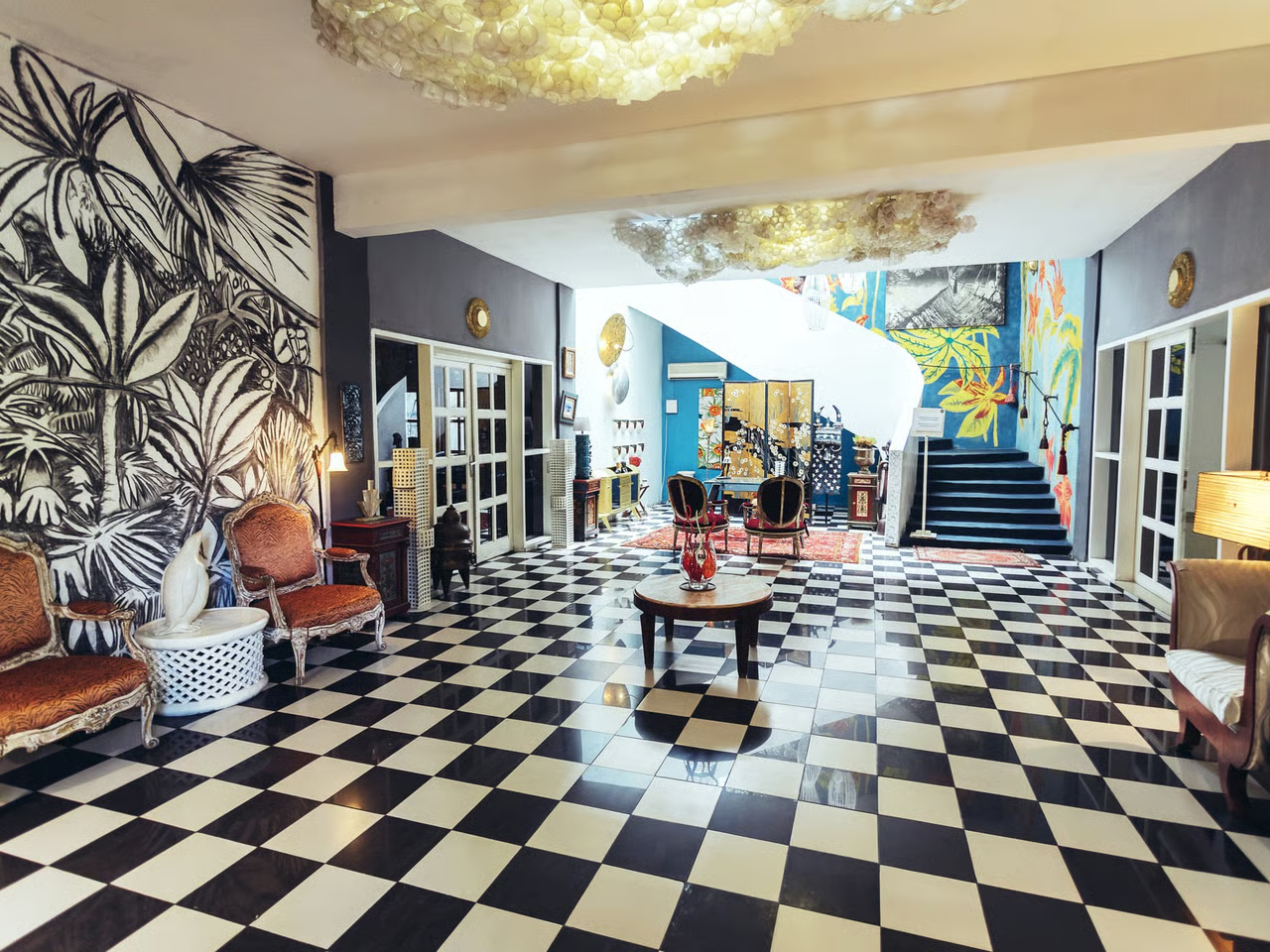
Photo: Bushman Café
The restaurants in Abidjan carry a design sensibility that surprises visitors who arrive with limited expectations. Places like Bushman — with its sleek, considered interior — demonstrate where the city is heading. The architecture and attention to space signal a food culture that takes itself seriously at every level of formality.
The street food scene, meanwhile, shows where the city lives. Plastic chairs, shared vendors, everyone crowded around the same stall — the informality never means a drop in quality. Street food in Abidjan holds its own against anything served indoors. Both experiences are worth having, but they offer different things. Restaurants show you where Abidjan is going. Street food shows you how it actually eats.
Cocoa at the Source
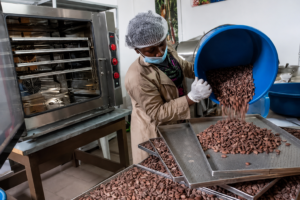
Cocoa roast process at Choco+, an artisanal chocolatier in Grand-Bassam, Côte d’Ivoire. Photo: Andrew Caballero-Reynolds
Côte d’Ivoire produces more cocoa than any other country on earth. That fact is well documented. What is less documented is what it means to taste it at the source. At Bushman restaurant, which houses a cocoa factory on site, the experience moves beyond food tourism into something more substantive — chocolate samples, cocoa-based drinks, and a cocoa and ginger blend that has the kind of flavor that processed chocolate never reaches. Raw, local, nothing like the product that arrives in foil wrappers in the West. For a country whose economy is built on cacao, tasting it in this form — unprocessed, present, deeply connected to the land that produced it — is one of the most distinctive food experiences Abidjan offers.
What to Know Before You Eat
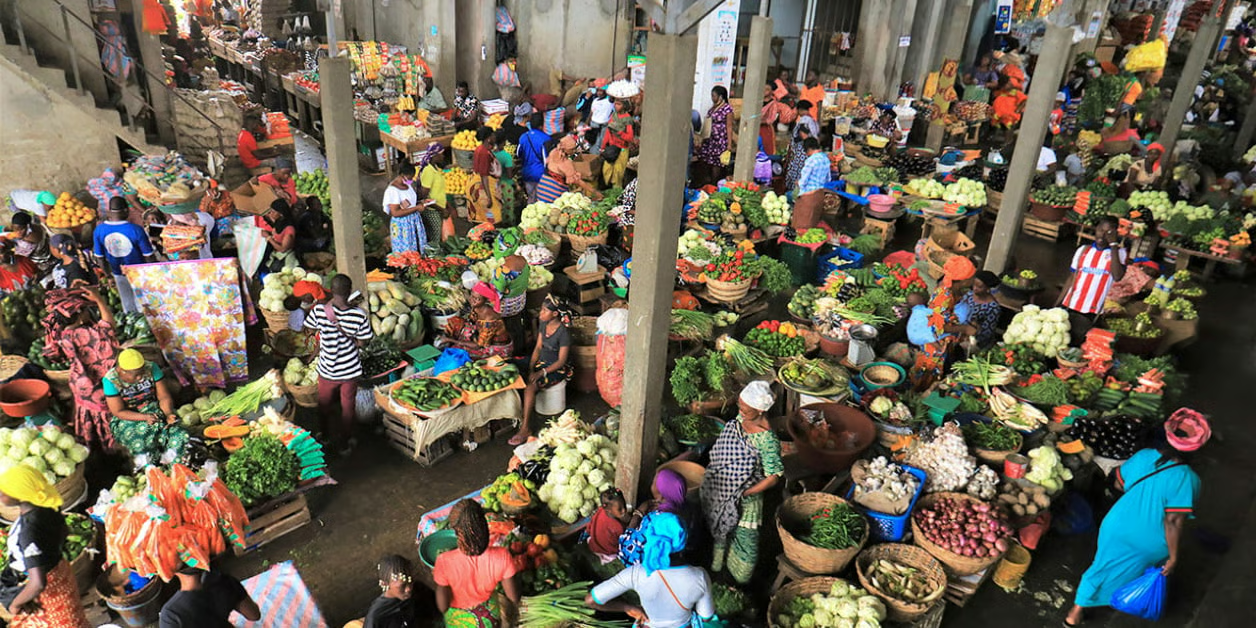
Adjamé market in Abidjan. Photo: Thierry Gouegnon
Ivorian food is not built around heat. Visitors arriving with expectations set by Ghana or Liberia — cuisines where chili carries real weight — will find something different here. The complexity in Ivorian cooking comes from technique, from seasoning, from the quality of ingredients grown in one of West Africa’s most agriculturally rich countries. The flavors are deep and considered. The heat is not the point. For travelers willing to pay attention, it is a cuisine that consistently delivers more than expected.
One practical note: the best eating in Abidjan happens late. The street food culture is an evening culture — vendors set up as the sun goes down, neighborhoods fill up, and the best meals of the day are the ones that stretch longest into the night. Arrive hungry and with no fixed plans for the rest of the evening.
Getting There
Abidjan is the commercial capital of Côte d’Ivoire and the entry point for most international visitors. Felix Houphouet-Boigny International Airport receives direct flights from Paris, Brussels, Casablanca, Addis Ababa, and major West African hubs. The street food scene is concentrated in neighborhoods like Marcory, Treichville, and around the main markets — all accessible and worth an evening dedicated entirely to eating.