
Why Slovenia Should Be on Every European Itinerary
Slovenia sits between four countries and gets a fraction of their visitors. That gap is the opportunity.
By Cynthia David | Published on June 3, 2026
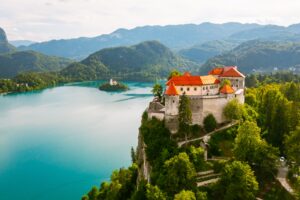
Mediaeval Bled castle. Photo: Shutterstock
If you’re wondering why visit Slovenia, the answer is simple: few countries combine mountains, lakes, charming cities, and a coastline in such a compact space.
Nestled between Croatia, Hungary, Austria, and Italy, Slovenia is a beautiful country that does not get the same love as its neighbors in terms of visitors. Maybe that is what makes Slovenia so special. As soon as you land, you are greeted with friendly faces and beautiful views. Slovenia is a nature lover’s paradise. From trails to waterfalls to lakes and a small coast, Slovenia has it all.
Why Visit Slovenia: Getting There and Around
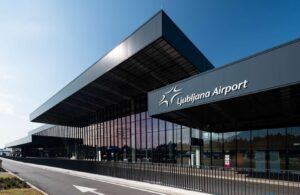
Ljubljana Airport. Photo: Shutterstock
Slovenia is easily accessible from the four countries it borders, with borders no more than a two-hour drive from the capital Ljubljana. Flixbus is a reliable option for road travel between neighboring countries. Flying into Ljubljana is also straightforward — European budget airlines make the route affordable, and public transportation from the airport to the city center is convenient and reliable. Forty minutes later, you have arrived in Ljubljana.
Ljubljana: Small Capital, Big Character
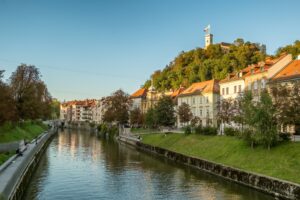
Ljubljana Old Town. Photo: Shutterstock
Ljubljana is one of the smallest capitals in Europe, but do not let that fool you. The historic heart of the city is the largest car-free zone in the European Union. Rent a bike or walk through this beautiful city at your own pace.
Ljubljana, also known as the city of dragons, is filled with charm. The dragon is a symbol of protection and can be found all over the city, most notably at Dragon Bridge. The Ljubljanica River flows through the capital, making it a picturesque addition to the cityscape. A boat cruise down the river is a leisurely way to take it all in. Evening walks alongside the river, with stops at local cafés, are one of the best ways to spend time in the city.
Ljubljana Castle
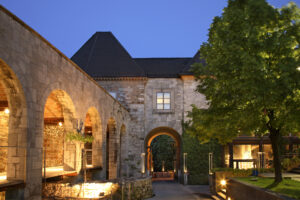
Ljubljana Castle. Photo: Shutterstock
High above the city, Ljubljana Castle towers over downtown. A funicular ticket gets visitors to the top without the steep walk. This former fortress is now the city’s main attraction, holding centuries of medieval architecture and history within its walls. The walking trails surrounding the castle give the place a quieter, more unhurried feel than most European capital landmarks. Take time to get lost in the cellars and soak in the views from the top.
For a broader look at the city, the Urban Electric Train is worth an hour and a half of anyone’s time. This trackless trolley covers the city over 90 minutes, pointing out places worth returning to. Stops include Parliament, Congress Square, and the Botanical Gardens. The Trnovo Pier stop is worth getting off for a walk.
Lake Bled
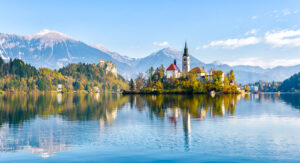
Lake Bled. Photo: Shutterstock
A trip to Slovenia is not complete without Lake Bled. Located in the Julian Alps, just 45 minutes from Ljubljana, it is one of the most visited day trips from the capital for good reason. A circular lake with an island in the middle, and on that island, a church. It needs to be seen in person to be fully understood.
Walking the perimeter of the lake covers just over three miles, with each viewpoint offering a different angle of the same extraordinary scene. Swimming in the lake is an option worth taking. Rowing out to the island to visit the Church of the Assumption is the classic move — for those less confident in a rowboat, a ferry runs the same route. Once on the island, the Bled Cake, a local cream slice, is the thing to try.
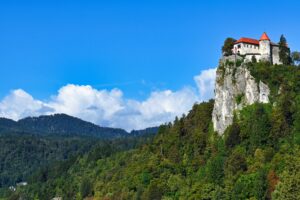
Bled Castle. Photo: Shutterstock
For more, hike up to Bled Castle. The oldest castle in Slovenia, it sits on a cliff above the lake with views that make the climb worthwhile. The museum inside holds historical and cultural artifacts that give the landscape real context.
Triglav National Park
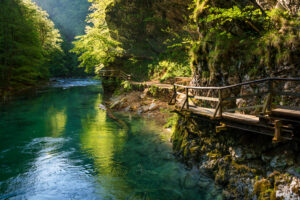
Vintgar Gorge in Slovenia’s Julian Alps. Photo: Shutterstock
Slovenia’s only national park is an easy day trip from Ljubljana by bus or car. Alpine peaks, waterfalls, gorges, glacial lakes, and turquoise rivers make it exactly what a national park should be. The trails are well marked and Vintgar Gorge is the standout walk, a path that leads directly behind a waterfall. For those looking for more after the hike, rafting on the Soca River is available. The turquoise water is unlike anything else in the region.
Lake Bohinj
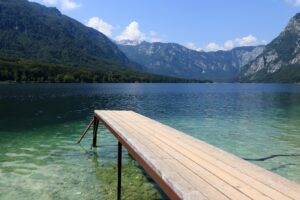
Lake Bohinj. Photo: Shutterstock.
If Triglav National Park and Lake Bled leave room for one more stop, Lake Bohinj is it. The largest lake in Slovenia, it is quieter and less visited than Lake Bled, which makes it the better choice for a full day on the water. Watersports are available along the shore, and a short hike leads to the Savica Waterfall. The Vogel Cable Car takes visitors up for a bird’s eye view of the whole lake below.
The Numbers
Slovenia uses the euro. A comfortable mid-range day in Ljubljana runs approximately €60 to €90 (around $65 to $98 USD) per person covering accommodation, meals, and local transport. The Flixbus from neighboring countries typically costs between €10 and €25 ($11 to $27 USD) depending on the route. The funicular up to Ljubljana Castle costs around €6 ($6.50 USD) return. The Lake Bled day trip from Ljubljana runs roughly €15 to €25 ($16 to $27 USD) by bus or shared transfer. Entry to Bled Castle is approximately €15 ($16 USD).
Why It’s Worth It
Slovenia is for the traveler who wants to see more than Europe’s most visited cities. It delivers reprieve from the crowds of neighboring countries, landscapes that shift from alpine to coastal within a few hours of driving, and a capital city that earns more time than most people give it. Do not skip Slovenia when visiting the region. It holds its own.