
This Hotel Made Entirely of Salt Sits on Bolivia’s Endless Salar de Uyuni
Palacio de Sal: Where the world’s largest salt flat becomes your floor, your walls, and your ceiling.
By Amina Mamaty | Published on June 4, 2026
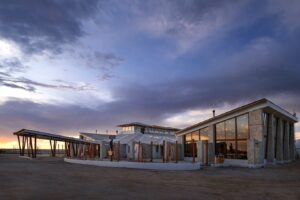
The Salar de Uyuni is the largest salt flat on earth, nearly 12,000 square kilometers of white at over 3,700 meters above sea level. It is cold at night, blinding at noon, and completely unlike anything else in South America. During the dry season it reads as an infinite desert. During the rainy season a thin layer of water turns the whole surface into a mirror.
Palacio de Sal sits at its edge in Colchani, 25 kilometers from the town of Uyuni. It was built from the flat itself. Over a million salt blocks pulled from the Salar and stacked into walls, ceilings, domed roofs, beds, tables, and sculptures. The footprint of the hotel, viewed from above, is shaped like an Andean cross, a deliberate reference to Andean cosmovision that runs through everything here.
The Property
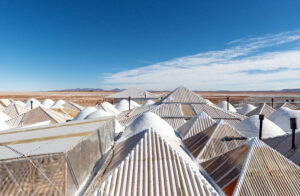
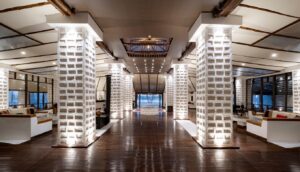
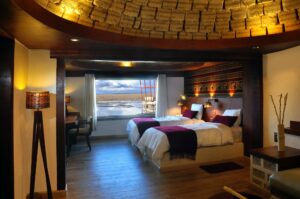
What makes Palacio de Sal work is not the material alone but what has been done with it. Every surface inside, floors, walls, ceilings, furniture, is salt. The igloo-shaped domes that crown each room are constructed entirely from stacked salt blocks, and the effect is genuinely architectural. Warm wood accents and deep red and ochre textiles prevent the interior from reading cold or clinical. The palette is Andean, deliberate, and grounded in the landscape outside.
The property spans over 4,500 square meters and holds 42 rooms across four categories, each named in reference to Andean cosmovision: Ukhu (the underworld), Kay (this world), Hanan (the upper world). Salt sculptures by Bolivian artists anchor the common areas, and the 360-degree viewpoint terrace sits above it all, positioned for the full spectrum of light the Salar produces across a day.
The Experience
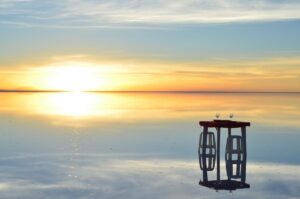
The reason to come here is the flat. During the dry season, May through October, it is an infinite white desert, and the conditions for photography are unlike anywhere else on earth. During the rainy season, November through March, a thin layer of water transforms the surface into a mirror that reflects the sky with near-perfect fidelity. The hotel functions as a base for both.
Excursions onto the Salar leave directly from the property. Guests can arrange tours to the cactus islands that rise from the flat, to the colored lagoons of the Bolivian southwest, and to the Eduardo Avaroa Andean Fauna National Reserve, where flamingos gather at altitude in improbable numbers. The hotel also offers bike rentals for those who want to cover the flat independently, a quieter, more disorienting way to do it. There is also a nine-hole golf course made entirely of salt, which is either the most absurd amenity in South America or the most logical one. For travelers continuing their Bolivia journey, Isla del Sol on Lake Titicaca offers a completely different side of the country.
The Dining
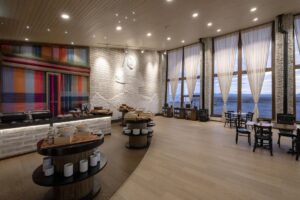
The restaurant is called Tika Palacio, and it operates on a buffet format that the hotel has thought carefully about, the idea being that proximity to the food, the ability to see and smell it before choosing, connects guests more directly to what they are eating. The kitchen leans on regional ingredients: local produce, llama, lamb, and chicken prepared in the style of the Bolivian highlands. High-altitude Bolivian wines, grown at 1,500 to 3,000 meters above sea level, are poured throughout service and carry a concentration that is specific to altitude viticulture.
The coffee bar handles everything outside meal hours: Bolivian specialty coffee sourced from organic producers, signature cocktails built around Singani, Bolivia’s native grape distillate, and a fireplace that matters at this elevation, where nights drop sharply regardless of season. Breakfast is included in the room rate.
The Spa
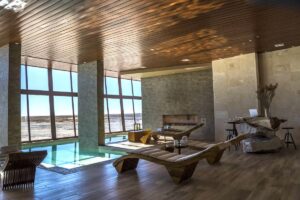
The Concept Spa deserves its own mention. Set against the uninterrupted view of the salt flat, it includes a saltwater pool, dry sauna, steam room, whirlpool baths, salt beds, and a massage room offering treatments built around regional ingredients: eucalyptus, local herbs, and altitude-adapted botanicals. At nearly 3,700 meters, the body responds differently to everything. The spa accounts for that.
Who It’s For
Palacio de Sal is for travelers who came specifically for the Salar and want a base that matches the scale of what they came to see. It is not a hotel for people who want a beach, a city, or a nightlife. It is remote, it is cold at night, and the altitude requires acclimatization. None of that is a problem if the flat is the reason for the trip. For landscape photographers, the property is as close to a dedicated outpost as exists in Bolivia. For couples, the combination of isolation, the domed rooms, and the mirror-flat rainy season makes it one of the more genuinely unusual romantic destinations in South America.
Best Time to Visit
The rainy season, November through March, produces the mirror effect that has made the Salar one of the most photographed places on earth. The dry season, May through October, is clearer, colder at night, and better for hiking and extended tours. April and October sit at the crossover between seasons and can offer elements of both. The hotel is open year-round.
The Numbers
Palacio de Sal operates four room categories. The Ukhu Standard rooms are the entry point, with salt-block igloo ceilings, private bathrooms, and the full material experience of the hotel at a more accessible price. The Kay VIP rooms step up in size and comfort while maintaining the same domed salt architecture. The Kay to Heaven category adds direct views of the Salar from both the bed and the living area. The Hanan Suite is the flagship, the most spacious option, with the full range of amenities and the most expansive outlook over the flat. Deluxe rooms start from $460 per night (approximately 3,180 BOB), taxes not included, with breakfast included across all categories.
Book directly and inquire at palaciodesal.com.bo.